What Does a Contact Microphone Record?
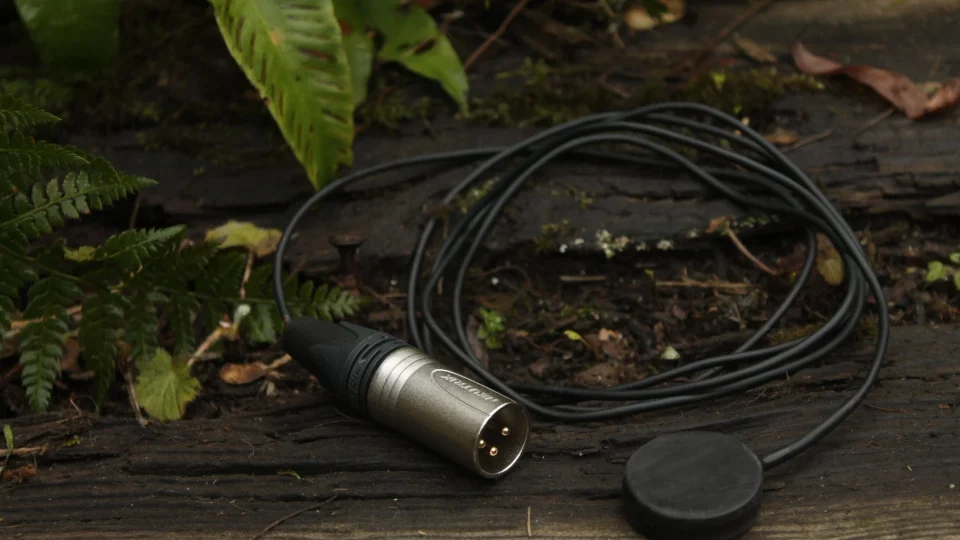
A contact microphone records vibration through the surface it touches. A conventional microphone mainly picks up changes in air pressure; a contact mic uses a sensor, often a piezoelectric element, to turn surface movement into an electrical signal. That means it can reveal sounds that a standard microphone would hear differently or miss beneath the surrounding room noise.
A different way to listen
Attach a contact mic to a resonant object and it captures the vibrations travelling through that object. Try a metal sheet, a wooden panel, a bowl or the body of an instrument. Each surface has its own character, so the recording can sound quite unlike the object would if you simply pointed a microphone at it.
For video creators, that can be useful for sound design. A contact mic might pick up the low thrum of a container being handled, a creak travelling through a table, or a strange resonant texture for an animation. These are creative possibilities rather than guaranteed results: the sound depends on the object, the attachment and the sensor.
Why the recording may sound unusual
Contact mics do not automatically produce a polished or realistic effect. Some piezo designs have resonant peaks and may sound thin or metallic. Their electrical output may also need an input or preamp designed for a high-impedance source. LOM’s technical guide explains that an impedance mismatch can reduce lower frequencies and contribute to a “tinny” sound.
Before recording a long take, listen to a short sample. Move the mic to a different point on the object, reduce handling noise and check whether your recorder or interface accepts the signal cleanly. If you want a naturalistic effect, compare the contact recording with a conventional mic recording; sometimes layering the two gives you more control than using either alone.
Try it as a sound-design tool
A contact mic is most useful when you want to hear the material itself. It can help create original textures for transitions, object sounds, games or short films. It is less suited to recording dialogue or a whole room because its purpose is to capture vibration through contact.
If you want to combine original recordings with licensed audio in a video, browse RouteNote Licensing’s music and sound effects catalogue.