For oral history interviews, choose music only after understanding the speaker’s meaning and the project’s editorial approach. Keep testimony clear, preserve important pauses and use cues deliberately at introductions, transitions or reflective passages. Music can…
Category: Film
Spot effects mark individual events; ambience establishes the continuing environment around them. Use the distinction to decide what needs a precise moment on the timeline and what needs to connect a scene across several shots.…
Have you ever recorded a video indoors, only to discover that the lighting appears to flicker or strange dark bands move across the footage? The lights might look perfectly normal to your eyes, making the…
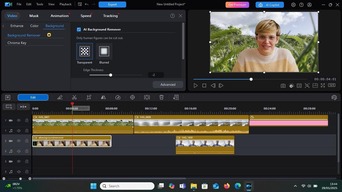
Editing software is becoming increasingly capable of responding to instructions rather than relying entirely on manual timeline adjustments. For video creators, that could mean spending less time navigating menus and more time shaping the finished…
An underwater scene needs a clear listening viewpoint, a controlled environmental bed and a few meaningful actions. Start by deciding whether the audience hears a diver’s experience, a detached fictional viewpoint or an observational recording.…
A believable rain scene needs a consistent weather bed, a few surface details and a clear listening viewpoint. Choose where the audience is hearing from before layering drops, wind and thunder. Rain outside a window…
The 3-2-1 backup rule is a simple way to think about protecting important files: keep three copies of your data, store them on two different types of media, and keep one copy off-site. The US…
Crop factor describes how a camera sensor’s size changes the angle of view captured by a lens compared with a 35 mm full-frame reference. It does not physically change the lens’s focal length or turn…
Music for a museum or exhibition video should support the curatorial idea, physical space and viewer attention. Begin with the purpose of the film, then choose a track that leaves room for artwork, narration and…